OPINION
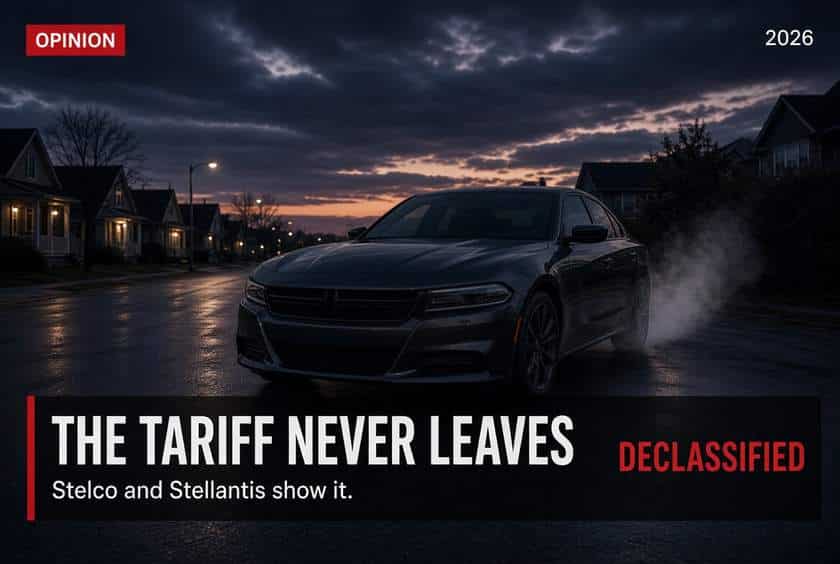
You ever have a neighbour pull into your driveway, tell you he isn’t staying, and leave the engine running? He’s not technically there. He’s just parked. You can’t use the driveway, you can’t quite call a tow truck, and every so often he revs it to remind you who has the keys.
That is roughly how tariffs work in Washington’s trade deals with Canada. The deal gets signed, the tariff gets lifted, everyone shakes hands, and the tariff idles at the curb. When the U.S. wants something more, they rev up the tariffs from the driveway.
Two Ontario cities, Hamilton and Brampton, are now finding out what that costs once the companies running their plants start planning around it.
The aluminum that came back
In May 2019, the U.S. lifted its steel and aluminum tariffs on Canada under a joint agreement that let Washington reimpose them if imports surged, the U.S. Trade Representative announced. The new continental trade deal, the USMCA, took effect in July 2020. A few weeks later, on Aug. 6, President Trump put a 10% tariff back on Canadian aluminum.
It lasted about five weeks. On Sept. 15, 2020, hours before Ottawa was to start its countermeasures, the U.S. dropped the tariff, The Canadian Press reported. It came off with conditions. Washington set expected monthly volumes and said it would reimpose the 10%, retroactively, on any month when shipments ran more than 5% over.
Chrystia Freeland, then deputy prime minister, said “common sense has prevailed.” The tariff hadn’t gone anywhere. It had backed down to the end of the driveway.
The largest trade deal ever made
Trump signed that deal in Buenos Aires on Nov. 30, 2018. “It is probably the largest trade deal ever made,” he said, according to NPR. Today his Section 232 tariffs on steel, set under a national-security law that lets a president impose duties on his own, apply to Canadian metal whether or not it qualifies under the deal he signed, the International Compliance Professionals Association notes.
Canada has tried paying its way out. In June 2025, Ottawa scrapped its digital services tax the day before collection was due to start, after Trump said he was ending trade talks over it. Talks resumed, for a while. By late August 2026 they had broken down, Trump had put a 50% tariff on $20 billion of Canadian goods, and he told a radio host it was “time to teach Canada you can’t do this anymore,” Reuters reported.
Then came the deal’s own scheduled checkup. At the July 1, 2026 joint review, the U.S. declined to renew the agreement in its current form, which sends it into annual reviews through 2036, according to ICPA and the law firm White & Case. An annual review is a lot like a lease you renegotiate every year with a landlord who also sets the property tax.
Seoul got the same treatment
This isn’t only a Canadian grievance. South Korea agreed in July 2025 to invest $350 billion in the U.S. in exchange for a 15% tariff rate. In January 2026, Trump posted that “South Korea’s Legislature is not living up to its Deal” and said he was raising tariffs on Korean autos, lumber and pharmaceuticals to 25%, CNBC reported. The threat was dropped after Korea’s parliament fast-tracked the trade bill, The Globe and Mail reported. The concession arrived first. The tariff stayed parked.
What a steel CEO told two audiences
Which brings us to Hamilton. When Ohio’s Cleveland-Cliffs bought Stelco in 2024, Ottawa approved the takeover on legally binding five-year job commitments. This fall Stelco began laying off workers in Hamilton, 175 so far by the count of the company and the union, and the company says U.S. tariffs, a factor beyond its control, are to blame.
Cleveland-Cliffs’ chief executive, Lourenco Goncalves, has explained the purchase more than once. He told CBC News that being able to sell Hamilton steel freely to American buyers was an underlying condition of the deal.
In remarks carried by CHCH News, he said he bought Stelco because he “could not afford anymore having Stelco flooding the market” in the United States. And in written testimony to the Congressional Steel Caucus on Jan. 14, 2026, he said that since buying Stelco in 2024, before Trump was back in office, “we blocked Stelco from selling steel into the U.S. market.”
So the American market was a condition of the purchase, the reason for the purchase, and something the buyer shut off himself, before the tariffs he now says were beyond his control. In the same testimony he told Congress he was glad the USMCA might not survive its 2026 review. A company with binding promises to Canada was rooting against the deal those promises were built on.
Brampton’s turn
Brampton’s version involves more public money. In 2022, Ottawa committed up to $529 million to retool Stellantis plants in Brampton and Windsor, The Canadian Press reported, and Stellantis had received more than $220 million in federal money by the time it moved the Jeep Compass to Illinois, CBC reported.
Compass work had been paused in February 2025, a month after Trump returned to office. On Nov. 9, Stellantis agreed to sell the idled plant to Roshel, a defence contractor, and it has offered to return $24 million.
Some of that $220 million went to Windsor, which is still running. Even so, it’s a bit like lending your neighbour money for a new fence and getting a tenth of it back once he’s sold the house.
The case that Washington is using the deals as written
The strongest defence of Washington is that none of this was hidden. The 2019 steel agreement included the snapback clause the U.S. later used, and the USMCA’s review was written into the text Canada signed. Section 232 is American law, and Trump campaigned on tariffs before he imposed them. Stellantis is a European automaker answering to its biggest market, and broken promises in Hamilton predate Trump, since Ottawa took U.S. Steel to court after its own 2007 Stelco takeover. Canada has retaliated too, and it dropped its digital tax under pressure, which isn’t how a partner holding out on principle behaves. On this view the U.S. has been unpleasant but predictable, and Canada should have priced that in.
Predictable isn’t the same as reliable. A deal you can count on being reopened isn’t much of a deal, and “you should have known we’d do it” is the landlord’s defence, not the tenant’s failing. Seoul had already signed its deal and still had to rush a bill through parliament to get the new tariff threat dropped.
Goncalves says he shut Stelco out of the U.S. market before any of the tariffs he now blames. Canada didn’t misread the fine print. The fine print was written to move.
Ottawa has its own pattern, mind you. When Stelco’s 15-day deadline ran out on Nov. 6, Industry Minister Mélanie Joly didn’t go to court. She asked the Competition Bureau, which cleared the takeover in 2024, to take another look, The Canadian Press reported. Stellantis now has 30 days.
Ottawa sets deadlines. Washington sets tariffs. Only one ever seems to come back.
Our news reports on Stelco’s layoffs in Hamilton and Ottawa’s threat to sue Stellantis have the details.
Sources
- Office of the U.S. Trade Representative, press release on the steel and aluminum deal with Canada and Mexico (May 2019)
- Akin Gump, “232 Tariffs on Certain Imports of Aluminum from Canada” (2020)
- The Canadian Press via Global News, James McCarten, “U.S. stands down on 10% aluminum tariffs imposed on Canada” (Sept. 15, 2020)
- NPR via WHYY, Bill Chappell, “USMCA: Trump Signs New Trade Agreement With Mexico And Canada To Replace NAFTA” (Nov. 30, 2018)
- International Compliance Professionals Association, USMCA Joint Review Tracker: Steel & Aluminum (updated Nov. 8, 2026)
- White & Case, “USMCA 2026 Joint Review: United States declines to extend Agreement, triggering annual reviews” (2026)
- Department of Finance Canada, “Canada rescinds digital services tax to advance broader trade negotiations with the United States” (June 29, 2025)
- Reuters via Kitco, “Trump: time to teach Canada you can’t do this anymore” (Aug. 26, 2026)
- CNBC, Dan Mangan, “Hyundai shares fall after Trump says tariffs on South Korean autos, pharma to rise to 25%” (Jan. 26, 2026)
- The Globe and Mail, James Griffiths, “Trump made new trade deals with countries around the world. Here’s how they played out” (Aug. 18, 2026)
- CBC News, “Stelco’s U.S. owner defends right to idle operations” (Sept. 30, 2026)
- Lourenco Goncalves, written testimony to the Congressional Steel Caucus (Jan. 14, 2026)
- CHCH News, “Joly asks Competition Bureau to probe Cleveland-Cliffs’ takeover of Stelco” (Nov. 6, 2026)
- The Canadian Press via insauga, Ritika Dubey, “Minister asks Competition Bureau to probe Stelco deal after CEO comments” (Nov. 6, 2026)
- The Canadian Press via Barrie360, Sammy Hudes and Daniel Johnson, “Ottawa serves Stellantis notice of default on funding agreement after Roshel deal” (Nov. 12, 2026)
- CBC via Yahoo News Canada, “Federal government gave Stellantis $220M to upgrade Ontario auto plants” (Dec. 4, 2025)
- The Canadian Press via BNN Bloomberg, “A timeline of Stellantis’ assembly plant in Brampton, Ont.” (Nov. 11, 2026)
- DeClassified Now, “Stelco Layoffs: How a CEO’s Tariff Lobbying Came to Hamilton” (Oct. 2, 2026)
- DeClassified Now, “Canada Threatens to Sue Stellantis Over Brampton Plant Sale” (Nov. 14, 2026)