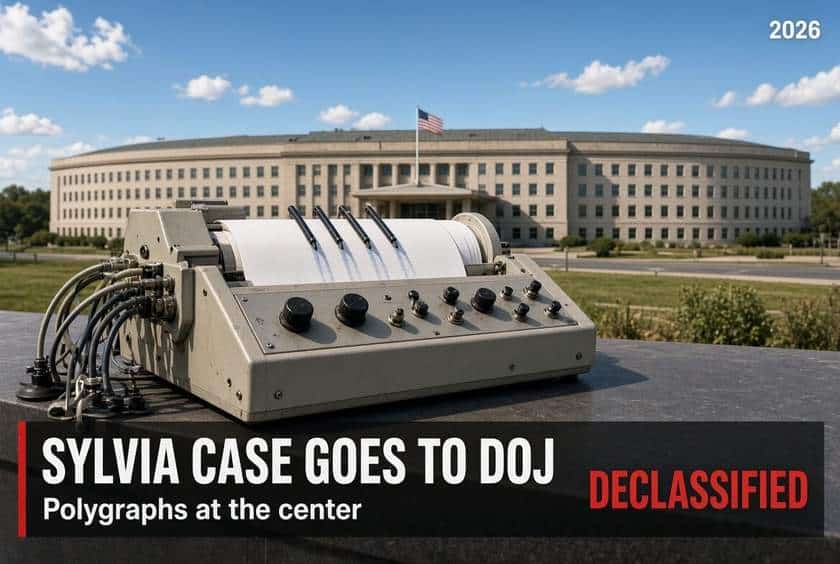
The Pentagon has referred the leak case around its fired top military planner, Army Lt. Gen. Brett Sylvia, to the Justice Department, and an internal investigation reported by Axios on Oct. 29 says he admitted giving classified information about Iran and Ukraine to two reporters. No charges have been announced, and Sylvia has not answered requests for comment from Axios, USA Today and others.
Defense Secretary Pete Hegseth fired Sylvia on Oct. 28. At first nobody explained why. A defense official told the Associated Press that night that no reason had been given, and the Joint Staff put out a statement thanking the general for 32 years of service. It then withdrew the statement, saying it “did not appropriately reflect the full circumstances.”
By the next day the official account had changed. Pentagon spokesman Sean Parnell said an extensive investigation by the Air Force Office of Special Investigations had led to personnel action, and that the matter, “along with others,” had gone to the Justice Department. He did not name Sylvia or the others. “We vowed to find you, and we meant it,” Parnell added. The Washington Post reported that officials confirmed the statement referred to Sylvia. The Justice Department said only that it has ongoing investigations into possible leaks of classified information.
A Silver Diner in Arlington and a deleted Signal thread
The fullest account comes from the internal report Axios obtained. We could not read the Axios story directly and have not seen the report, so these details come from outlets that relayed or quoted it, among them Iran International and the Daily Wire.
The report accuses Sylvia of “unauthorized disclosures to the media” beginning as early as June 2025. One reporter, who was writing a book, met him twice, and one meeting took place at a Silver Diner in Arlington, Va., because the reporter’s Pentagon access had been revoked between meetings. There, according to the report, Sylvia used notes he had taken from a classified report to describe U.S. assistance to Ukraine. He did not clear the meetings with public affairs.
The second reporter involves Signal. Sylvia told investigators he received a message he believed concerned Iran, could not recall exactly what it said, did not reply, and accidentally deleted the entire thread when he tried to remove it. U.S. officials suspect the deletion was deliberate. The report also says he acknowledged being one of 20 officials cited in a news story critical of Pentagon leadership, that he cooperated with questioning, and that he gave up his personal phone for forensic examination.
Three failed polygraphs or four, and a dispute over the admission
The accounts do not match on several points. A U.S. official told Axios that Sylvia failed four polygraphs and then acknowledged the misconduct on video. A senior Pentagon official told Reuters he failed three, and a Pentagon official gave Fox News the same number.
The admission itself is contested. A colleague told the Post that Sylvia repeatedly denied leaking classified information while acknowledging contact with journalists. Two Pentagon sources told CBS News the firing was tied to the polygraphs but disputed that he leaked classified material. The Atlantic, which first reported the ouster, cited sources saying Hegseth had lost confidence in him amid tensions with policy chief Elbridge Colby. We found no public comment from Sylvia himself.
President Trump, speaking to reporters on Oct. 29, said the general would have “big problems.” We found no evidence released publicly by the Pentagon beyond Parnell’s statement.
Early coverage tied the firing to the Iran war. The J5 director generates and coordinates military plans with the chairman of the Joint Chiefs, according to the AP, and Sylvia was the second general pushed out of the post under Hegseth, after Lt. Gen. Joseph McGee. But a Pentagon official told Fox that Sylvia was not a central planner of the Iran war, which belongs to U.S. Central Command, and NPR’s Tom Bowman reported the same division of labor.
The Pentagon tried this in 1982
On Jan. 7, 1982, about 25 people attended a top secret Defense Resources Board briefing at which officials said Reagan’s arms buildup might cost $750 billion more than the $1.6 trillion planned over five years. The Washington Post had the story the next day. Deputy Defense Secretary Frank Carlucci ordered those at the session to take lie detector tests.
John C.F. Tillson, the Pentagon’s director of manpower management, failed his, according to his attorney. A West Point graduate who won two Silver Stars in Vietnam, he faced dismissal proceedings in what the Christian Science Monitor called the Pentagon’s first move to crack down on news leaks. He denied the allegations. The Post reporter, George Wilson, wrote to Defense Secretary Caspar Weinberger that Tillson was not his source and that he would swear to it, the lawyer said.
Within weeks the Pentagon backed off. Defense sources told the Monitor in May 1982 that a failed test was not sufficient reason to fire him, and he received a reprimand for disregarding rules on handling classified information. The Government Accountability Office reviewed the case that fall and found the investigation had followed polygraph directives and was conducted effectively, though it removed nobody from a position held at the time of the leak.
The parallel has limits. Tillson denied everything, while Sylvia, if the Axios account holds, admitted at least part of it. The table below sets his case beside three others.
| Year | Official | Basis reported | Outcome |
|---|---|---|---|
| 2026 | Lt. Gen. Brett Sylvia | Polygraphs, internal report, reported admission | Fired, referred to DOJ, no charges announced |
| 2025 | Three Pentagon officials, including Dan Caldwell | Unauthorized-disclosure investigation | Fired, never referred for prosecution; Caldwell later joined ODNI |
| 2016 | Gen. James Cartwright, former vice chairman of the Joint Chiefs | FBI questioning over a book on Stuxnet | Pleaded guilty to false statements, not leaking; pardoned by Obama in January 2017 |
| 1982 | John Tillson, Pentagon manpower director | Failed polygraph | Firing reversed, reprimanded |
The Signal chat in the background
NPR’s Bowman raised another comparison, Hegseth’s own 2025 Signal messages about strikes in Yemen. The Pentagon inspector general found those messages created a risk to operational security and broke rules on personal phones and record keeping. Hegseth told the inspector general he shared only an unclassified summary and had the authority to declassify, and Parnell called the review a total exoneration. The inspector general did not determine whether the information had been declassified at the time.
Hegseth announced a joint leak task force with the Justice Department in July, according to the Daily Wire, and Pentagon leadership has given polygraphs to senior officers, including members of the Joint Staff, USA Today reported. A Hill staffer told NPR that Congress is considering defense bill language barring the firing of military personnel without first going to lawmakers.
Sources:
- Associated Press via PBS, the firing and the J5’s role (Oct. 28)
- Reuters via Defense News, Parnell, three polygraphs, the withdrawn statement (Oct. 29)
- USA Today via Yahoo, the referral, DOJ statement, 2025 firings
- Axios, the internal report (not read directly; relayed by the outlets below)
- Iran International, relaying Axios, Reuters and CBS News
- Daily Wire, quoting the report via Axios
- Yahoo News summary of the Axios, Reuters, CBS and Washington Post accounts
- IBTimes, Parnell’s statement and the Post’s reporting
- Townhall, quoting Fox News and summarizing The Atlantic
- NPR transcript, Tom Bowman (Oct. 29)
- FactCheck.org, the Pentagon inspector general’s Signal report
- NPR, the inspector general’s findings (Dec. 3, 2025)
- Christian Science Monitor, “Pentagon accuses official of leak” (April 28, 1982)
- Christian Science Monitor, “Pentagon won’t fire man accused of budget leak” (May 21, 1982)
- GAO, Review of DOD Investigation of Leak of Classified Information to The Washington Post (GGD-83-15, 1982)
- Reuters via Yahoo, the Cartwright pardon