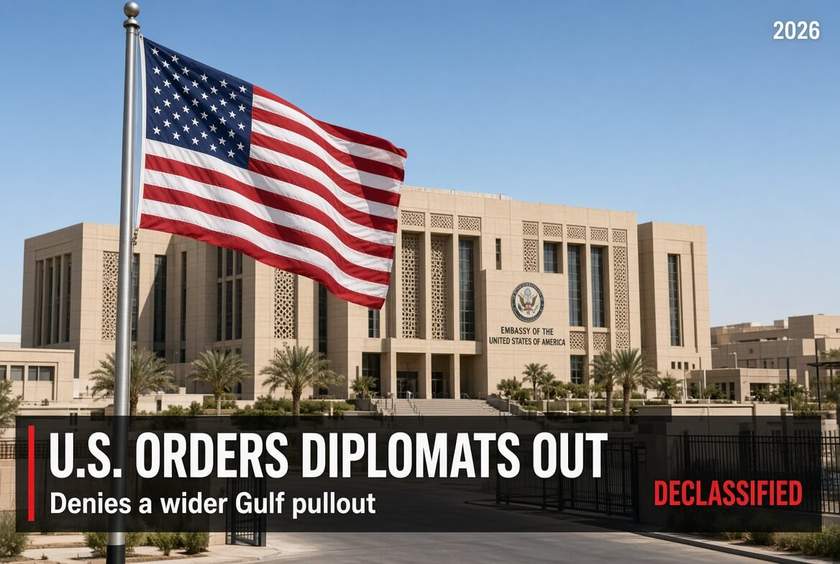
The State Department on Wednesday, Oct. 21, ordered non-emergency U.S. government employees and their families to leave Saudi Arabia, citing a run of Houthi missile and drone attacks on the kingdom. The order covers the embassy in Riyadh and the consulates in Jeddah and Dhahran. The posts have not closed, and consular services remain available, Newsweek reported. State Department spokesperson Tommy Pigott announced the move on X, writing that “Iranian-supported Houthis have increasingly engaged in hostilities against Saudi Arabia,” including attacks on civilian airports and critical infrastructure.
Hours after the order, an attack hit King Fahd International Airport in Dammam, in the Eastern Province. Saudi Arabia’s General Authority of Civil Aviation first reported one person killed and eight injured, Reuters reported. Its later statement put the dead at two, a Saudi citizen and an Indian national, according to CNN and The National, and India’s embassy in Riyadh confirmed one of its citizens was among them. Separately, the Energy Ministry said debris from a drone intercepted over Saudi Aramco’s Shaybah oil field killed two people and injured two. The Houthis claimed both attacks on Thursday, CNN reported.
“Saudi Arabia only,” and the reports that say otherwise
Pigott’s post went further than announcing the order. It said the departure applied to “non-emergency U.S. government employees and their family members in Saudi Arabia only,” CBS News reported. Pigott also called a report of planned departures from embassies across the region inaccurate, according to UPI and Newsweek.
That report came from more than one outlet. Four U.S. officials told Reuters that missions in other Gulf states would also order family members to leave. A diplomatic source told AFP that families of embassy staff in the United Arab Emirates, Jordan, Qatar and Bahrain had been told to go, and that all U.S. embassy staff had been ordered out of Saudi Arabia. The State Department’s own wording contradicts the second claim, since the order covers non-emergency staff only.
The department hasn’t said other posts are untouched, though. A source told CNN that a few other U.S. posts in the region are adjusting their staffing in response to the Houthi threat. “This is about the Houthis,” a State Department official told the network. CBS News reported that several embassies have cut staff under “restricted operations,” a status the department introduced in August that lets a post shrink its staff and services without suspending operations. CBS didn’t name the embassies. Scripps News reported that the department itself said embassies in other Gulf countries would see temporary staffing changes, and that those posts were already under restricted operations.
So the dispute is narrower than the headlines suggest. No one on the record has confirmed a mandatory departure outside Saudi Arabia, and the department has acknowledged smaller cuts elsewhere.
Ordered versus authorized departure
An ordered departure is the State Department’s mandatory step. Designated staff and accompanying family members must leave because of security risks, as CBS described it, and the post runs with emergency staff only, according to NBC News. The lighter step is authorized departure, which allows the same people to leave without requiring it.
Saudi Arabia went through both this year. After the U.S.-Israeli war on Iran began on Feb. 28, the Riyadh embassy and the CIA station it hosts came under drone attack in early March, Reuters reported. The department first authorized departure, then on Sunday, March 8, “ordered non-emergency U.S. government employees and U.S. government employee family members to leave Saudi Arabia,” according to a State Department statement reported by JNS. The embassy ran on a skeleton staff for months afterward, the Telegraph reported, and some diplomats had only recently returned.
Riyadh has seen repeated drawdowns before. In April 2004, Secretary of State Colin Powell announced an ordered departure after the threat level rose. It required family members of all employees at the embassy and the Jeddah and Dhahran consulates to leave, State Department officials said. AFP reported at the time that it was the third order in 12 months sending U.S. diplomats out of Saudi Arabia.
Troop moves and the post-election Iran plans
The diplomatic order arrived alongside reports of a military pullback. Two U.S. officials and two people familiar with the matter told NBC News that the military has quietly been reducing its troop presence at bases across the Middle East in recent days. A U.S. official and a senior U.S. military official told CBS News the same, citing threats from the Houthis and direct threats from Iran. Neither outlet named the bases or gave numbers.
On Wednesday evening The New York Times, citing U.S. officials familiar with the discussions, reported that U.S. and Israeli militaries have drawn up plans for renewed strikes on Iran after the Nov. 3 midterm elections. The Jerusalem Post and CNBC, relaying the Times report, said the plans describe a short campaign of about three days against Iran’s nuclear facilities, energy infrastructure, and missile and drone arsenal. President Trump has not approved them, according to the Times. Several headlines, including CNBC’s, linked the Saudi order to those plans. No official has made that link. The only reason the State Department has given is the Houthis.
Oil moved on the news. Brent crude rose above $110 a barrel after the Dammam attack, The National reported, and CNBC tied the rise to fresh signs of escalation.
The U.S. Mission in Saudi Arabia’s Oct. 21 security alert, posted on the embassy’s X account, now requires U.S. government employees to get special authorization from the Chief of Mission before using any Saudi airport. It says King Khalid International Airport in Riyadh remains suspended, and that the airports in Jeddah and Dammam are operating with delays and cancellations. A Houthi strike on King Khalid earlier this month killed 12 people, including one American, and injured more than 300, CBS reported. Newsweek put the toll at 14.
We’ve covered what Saudi Arabia has and hasn’t confirmed about the airport strikes in Houthi Strikes on Riyadh, What Saudi Arabia Won’t Confirm, the Aramco attack in Aramco’s Headquarters Fire, and the shipping war in our Hormuz Tanker Attack Tracker. The embassy’s alert is on the mission’s website.
Sources
- U.S. Mission Saudi Arabia, “Security Alert” (Oct. 21, 2026), also posted on the embassy’s X account. Used for: the airport authorization rule and airport status.
- CBS News, “U.S. ordering some government staff to depart Saudi Arabia, reducing military footprint in Middle East” (Oct. 21, 2026). Used for: Pigott’s “Saudi Arabia only” wording, restricted operations, the ordered-departure definition, the military footprint and the King Khalid toll.
- CNN via KESQ, “US orders departure of some embassy staff and families from Saudi Arabia amid Houthi threat” (Oct. 22, 2026). Used for: Pigott’s post, the State Department official’s remarks, the Dammam and Shaybah tolls and the Houthi claim.
- Reuters via Yahoo, “US orders diplomats to depart Saudi Arabia amid Houthi strikes” (Oct. 21, 2026). Used for: the four U.S. officials, the first Dammam toll, Shaybah and the March drone attack on the embassy.
- The National, “US pulls diplomats from Saudi Arabia but denies wider Gulf withdrawal” (Oct. 22, 2026). Used for: the revised Dammam toll, India’s confirmation, the AFP and Reuters accounts and Brent prices.
- UPI via Yahoo, “U.S. State Department orders some staff, families to leave Saudi Arabia” (Oct. 21, 2026). Used for: Pigott’s rejection of the region-wide report.
- Newsweek, “US Orders Some Diplomats To Leave Saudi Arabia After Deadly Attacks” (Oct. 22, 2026). Used for: the posts covered, consular services and the 14 toll.
- AFP via Türkiye Today, “US orders embassy staff and families to leave Saudi Arabia” (Oct. 21, 2026). Used for: the diplomatic source’s account of the UAE, Jordan, Qatar and Bahrain.
- Scripps News via KSHB, “US orders diplomats, families to leave Saudi Arabia as Houthi attacks escalate” (Oct. 22, 2026). Used for: the department’s statement on other Gulf embassies and the diplomats’ recent return.
- NBC News, “U.S. troops and diplomats evacuating Middle East posts, sources say” (Oct. 21, 2026). Used for: the troop reduction and the emergency-staff definition.
- The Telegraph via Yahoo, “US withdraws diplomats from Saudi Arabia” (Oct. 22, 2026). Used for: the embassy’s skeleton staffing.
- JNS, “US pulls staff from Saudi Arabia, southeast Turkey” (March 9, 2026). Used for: the March authorized and ordered departures.
- The Jerusalem Post, “US, Israel plan renewed Iran strikes after US midterms, focusing on short, intense attacks – report” (Oct. 22, 2026). Used for: the New York Times report on strike plans.
- CNBC, “U.S. pulls diplomats from Saudi Arabia as it reportedly readies Iran strikes after midterms” (Oct. 22, 2026). Used for: the Times report’s targets and approval status, and Brent prices.
- AFP via Al Jazeera, “US to evacuate diplomats from Saudi” (April 15, 2004). Used for: the 2004 ordered departure.