OPINION
There is a particular joy in buying a new label maker. For about a week, everything in the house gets a label. The pantry, the cables, the drawer with the batteries. Then you notice the label maker doesn’t actually put anything away.
Democrats got their label maker on Tuesday night. Rep. Robert Garcia of California, in line to chair the House Oversight Committee, posted two words on X: “LAWYER UP.” Sen. Ron Wyden of Oregon managed it in one: “Subpoenas.” Rep. Delia Ramirez of Illinois listed Kristi Noem, Stephen Miller, Tom Homan and others by name and told them to clear their schedules, Fox News reported.
On Wednesday, the man expected to become speaker was asked who the targets would be. “We haven’t evaluated who are going to be the targets of the investigation right out of the gate,” Hakeem Jeffries told CNBC. So the lawyers have been told to get ready, and the list of who needs one is still being drawn up.
What a subpoena does, and who delivers the consequences
The power is real. From January, Democrats will chair every committee in both chambers. House rules let a committee hand its subpoena authority to the chair, so a chair can demand documents and testimony without a single Republican vote, as Fox News noted. Garcia told Punchbowl News before the election that his staff weren’t “starting from scratch.”
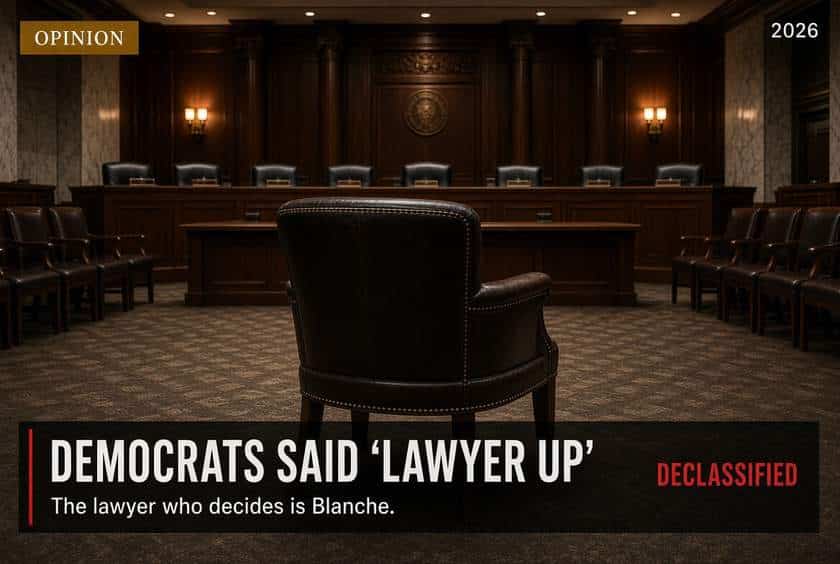
The trouble starts when someone says no. Congress can hold that person in contempt, but a criminal contempt referral goes to the Justice Department, which decides whether to prosecute. The attorney general is Todd Blanche, President Trump’s former defense lawyer, confirmed in August.
You don’t have to guess how a Justice Department handles contempt referrals against its own side. The department has a long-standing policy of not prosecuting officials who withhold information under a president’s claim of executive privilege, and it has applied it to both parties. A Republican House held Eric Holder in contempt in 2012. A Democratic House held Bill Barr and Wilbur Ross in contempt in 2019. A Republican House held Merrick Garland in contempt in 2024. The department declined to prosecute every one of them, and it declined to charge Mark Meadows after the Jan. 6 committee referred him, the AP and NPR reported.
The two people who were prosecuted, Steve Bannon and Peter Navarro, were former Trump advisers charged while Joe Biden was president. Bannon was convicted in 2022 and served four months. In February, the Trump Justice Department asked the courts to dismiss his indictment, and in April the Supreme Court sent the case back so a lower court could do it, NPR and SCOTUSblog reported. The sentence is already served. The conviction may not survive the paperwork.
So “LAWYER UP” is good advice. It’s just not clear the lawyers will be very busy.
The bills and the veto
The legislative plans run into a different wall. In their first 100 hours, House Democrats intend to restore expired health insurance subsidies, reverse Medicaid cuts, undo Trump’s tariffs and vote again on ending the Iran war, CNBC reported. Trump has already promised to veto Democratic bills, the AP reported, and posted a red cap reading “veto” to make the point.
Overriding a veto takes two-thirds of both chambers. Democrats have flipped seven Senate seats, which is a historic night and still well short of 67. War powers votes have the same problem. Both Republican-controlled chambers passed a resolution in June calling for an end to the conflict, but it was a concurrent resolution with no force of law, CNBC reported. A binding version failed in the Senate in September, 49 to 50, according to Al-Monitor. It will probably pass in January, and then it will meet the veto.
The case for subpoenas that never end in handcuffs
None of that makes oversight pointless, and the best argument for Garcia’s two words is history. Oversight rarely works by sending people to prison. It works by putting things on the record. In July 1973, a Senate committee staffer asked a former White House aide, Alexander Butterfield, a routine question, and Butterfield acknowledged that Nixon taped his conversations. Three days later he said it at a public hearing. Nobody was held in contempt that day. The hearing found the tapes, and the tapes did the rest. The Jan. 6 committee’s subpoenas produced months of testimony and a public record no later dismissal can undo. Navarro was sentenced to four months too. Documents also arrive just because someone fears a subpoena, and the threat changes behavior before any vote is taken. A majority that can hold hearings, publish transcripts and drag an agency head before cameras has real power over a second-term president. It just isn’t the power of a prosecutor.
That is the honest version of Tuesday’s posts. Democrats won the right to ask questions in public and to keep asking. Asking is how Watergate started. It is not how most investigations end. Holder, Barr and Garland each took office, clashed with a newly hostile House, were held in contempt, and kept their jobs or left on their own schedule.
The new chairs should print their subpoenas on good paper. Somebody at the Justice Department will be filing them.
Sources:
- Fox News, “Pete Hegseth ‘LAWYER UP’: Dems immediately put Trump on notice” (Nov. 4, 2026). Used for: Garcia, Wyden, Ramirez, chair subpoena rules, Punchbowl quote, contempt process.
- CNBC, “Democrats map out an agenda to address affordability and corruption after midterm sweep” (Nov. 4, 2026). Used for: Jeffries’ quote, the first-100-hours bills, Blanche as attorney general.
- NPR, “Back in the majority, Democrats have plans for a long list of Trump investigations” (Nov. 4, 2026)
- AP via PBS News, “Democrats win control of U.S. House, in major rebuke to Trump” (Nov. 4, 2026). Used for: the veto pledge and cap, Senate flips.
- CNBC, “Americans have said ‘NO TO WAR,’ Iran speaker says as Democrats take Congress” (Nov. 4, 2026). Used for: the June concurrent resolution.
- Al-Monitor, “Democrats on track to win Senate control, setting up Iran war showdown” (Nov. 3, 2026). Used for: the September 49-50 vote.
- AP via WJLA, “Justice Department clears Garland in contempt case” (June 2024). Used for: the department’s policy, Barr, Meadows, Holder.
- NPR via WWNO, on the Garland, Barr and Holder contempt cases (June 15, 2024)
- NPR, “Supreme Court clears the way for Bannon contempt case to be dismissed” (April 6, 2026)
- SCOTUSblog, “Court allows Steve Bannon to move forward on dismissal of criminal charges against him” (April 6, 2026)
- NPR, “Ex-Trump adviser Peter Navarro sentenced to 4 months for contempt of Congress” (Jan. 25, 2024)
- Gerald R. Ford Presidential Library, Alexander P. Butterfield Papers finding aid. Used for: Butterfield’s 1973 testimony.